What Is the Weritas DAO?
Summary
Premature decentralization introduces governance capture, treasury misallocation, fragmented execution, and regulatory exposure.
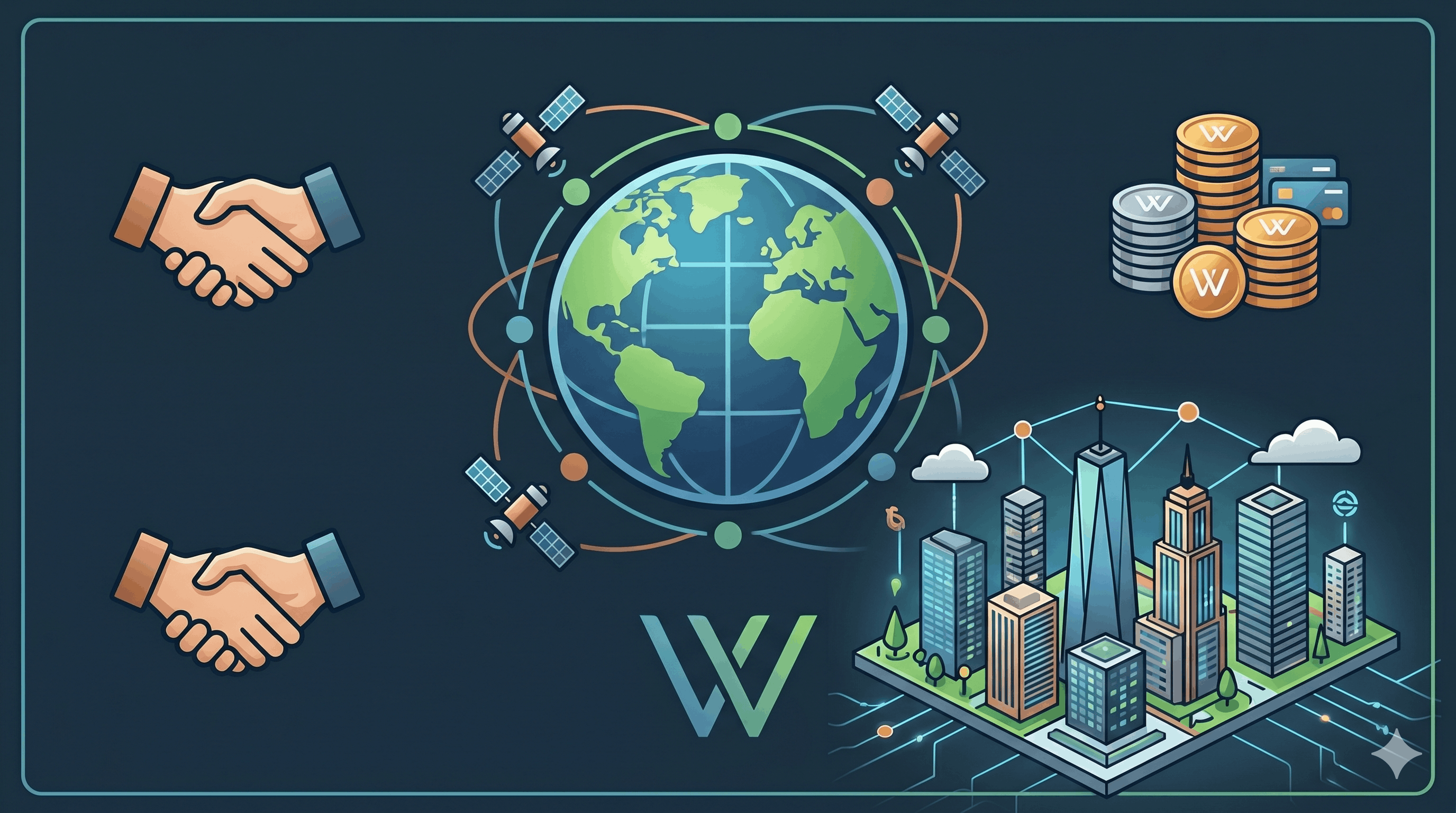
What Is the Weritas DAO?
A Governance System for Institutional-Grade Financial Infrastructure
The Weritas DAO is the governance and coordination layer of the Weritas Protocol. It is designed to oversee, guide, and progressively decentralize a system built for real-world credit, structured finance, and programmable capital markets.
It is not a typical DAO. It is a deliberately structured, phased governance system aligned with institutional capital requirements, cross-jurisdictional legal realities, and real-world financial infrastructure.
At its core, the Weritas DAO exists to ensure that the protocol evolves in a way that is secure, accountable, and ultimately decentralized—but only when the system is ready.
What the Weritas DAO Is (and Is Not)
The Weritas DAO is a governance coordination layer. It enables collective decision-making and provides a framework through which the protocol can evolve over time.
It is not a legal entity, nor is it an operating company. It does not function as an uncontrolled treasury or a fully autonomous organization in its current state.
This distinction is important. The DAO governs, but it does not directly operate or assume legal responsibility.
The Current State: Controlled Initialization
At present, the Weritas DAO operates within a controlled initialization phase.
All WRTH tokens have been minted and secured within multi-signature custody wallets. Access to these tokens is tightly controlled, and no single party has unilateral authority over their movement.
At this stage, the DAO does not directly control treasury functions or token distribution. Governance exists in defined form, but it has not yet been fully activated on-chain.
This is intentional.
Why This Structure Exists
Premature decentralization introduces real risks. These include governance capture, treasury misallocation, fragmented execution, and regulatory exposure.
Weritas avoids these risks by sequencing governance deliberately.
Rather than decentralizing immediately, the protocol first establishes secure custody, clear governance frameworks, and operational discipline. Only after these elements are in place does it begin to introduce decentralized control.
This approach reflects how institutional systems are built—gradually, with safeguards, and with clear accountability at each stage.
The Weritas Governance Model
The Weritas DAO is designed to evolve through a series of phases.
In the initial phase, token supply is established and secured, and governance rules are defined. Control remains within a multi-signature framework.
In the next phase, governance begins to activate. Proposals are introduced, and community participation starts to take shape, but within controlled boundaries.
As the system matures, governance authority expands. Treasury access is gradually enabled, and more decisions move on-chain. The DAO transitions from an advisory role to an operational one.
Ultimately, the DAO becomes a full coordination layer, governing capital allocation, protocol evolution, and ecosystem development through binding proposals.
The Role of Multi-Signature Custody
The multi-signature structure is central to the current design.
It ensures that no single individual can move funds or make unilateral decisions. All actions require coordinated approval, aligned with predefined policies and governance frameworks.
This is not a contradiction to decentralization. It is a prerequisite for it.
Before control can be distributed, it must first be secured.
Legal and Institutional Considerations
From a legal standpoint, DAOs are not universally recognized as formal entities. In many jurisdictions, they lack the capacity to contract, hold assets, or assume liability in a traditional sense.
For a system designed to interact with real-world credit markets and institutional capital, this creates constraints that must be addressed through structure.
Weritas reflects this reality by separating governance from execution. The DAO governs protocol direction and decision-making, while custody and real-world interactions remain within controlled and compliant frameworks.
This separation enables the protocol to operate responsibly across jurisdictions while maintaining a path toward decentralization.
What the Weritas DAO Will Govern
As governance is activated, the DAO will take on responsibility for key aspects of the protocol.
These include capital allocation into structured credit environments, setting and adjusting protocol parameters such as risk models and credit structures, and guiding ecosystem development through partnerships and integrations.
Over time, the DAO will also govern its own evolution, refining rules, thresholds, and governance mechanisms as the system matures.
Strategic Positioning
The Weritas DAO is not designed to govern a purely digital or speculative system.
It is designed to coordinate real-world financial activity—specifically, the flow of capital into structured credit markets.
This shifts the role of the DAO from community governance toward financial system governance.
The Path Forward
Governance within Weritas will not be activated all at once. It will expand progressively.
Participation will increase in structured phases. Decision-making authority will move on-chain over time. Treasury control will transition from multi-signature custody to decentralized mechanisms when the system is ready.
Each step will be taken deliberately, with attention to stability, alignment, and institutional standards.
Final Definition
The Weritas DAO is a phased, institutionally aligned governance system designed to coordinate capital, participants, and protocol evolution across real-world credit markets.
It begins with controlled custody and evolves toward decentralized financial infrastructure.
Closing Thought
Decentralization is not an event. It is a process.
Systems that decentralize too early often fail. Systems that build structure first and distribute control over time have a far greater chance of lasting.
Weritas is built on that principle.
It is not simply launching a DAO. It is constructing a governance layer capable of supporting real-world financial systems at scale.